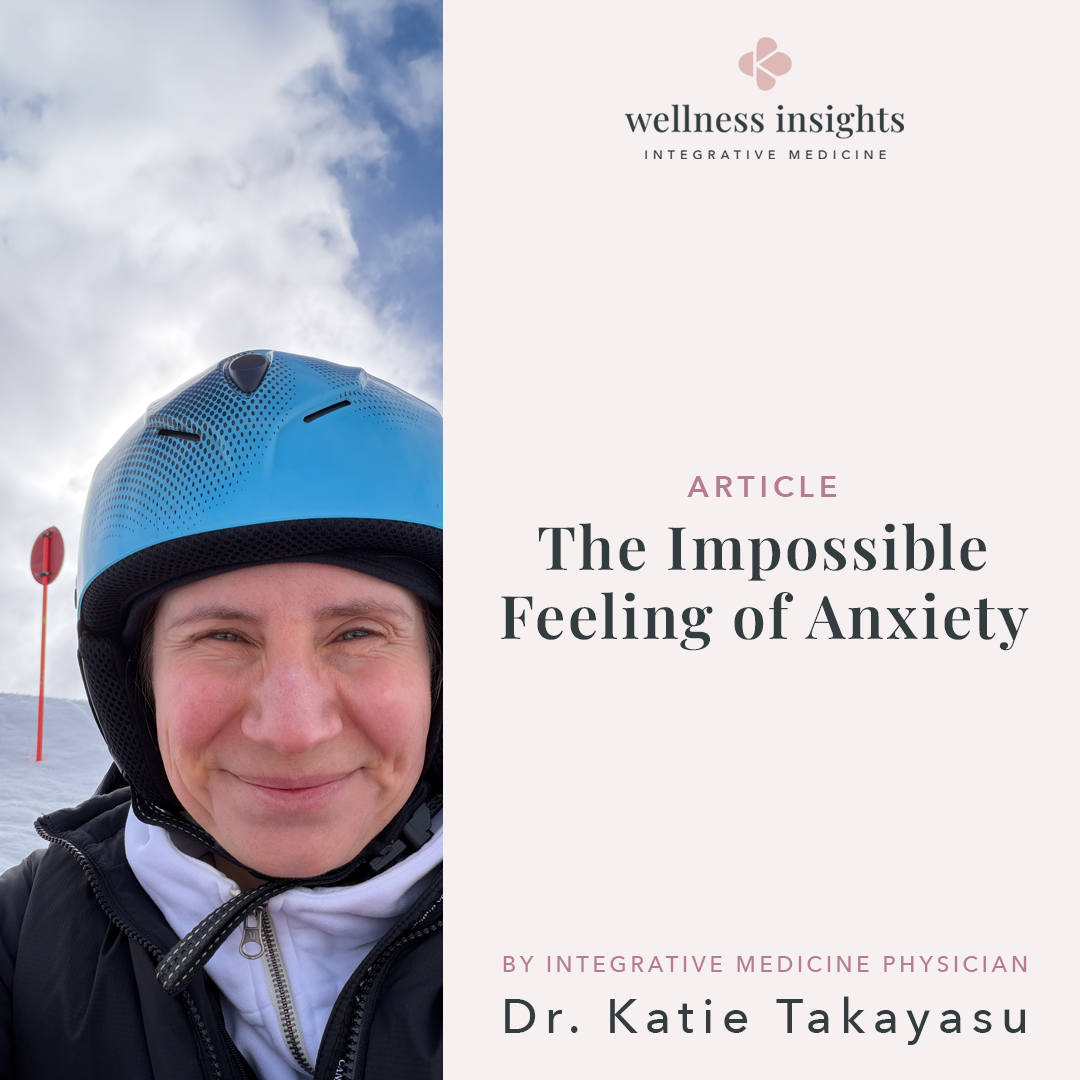
“No amount of anxiety makes any difference to anything that is going to happen.”
– Alan Watts
It was just this past winter that I had one of my most harrowing experiences with fear.
The scene: The top of a snowy mountain in the Alps inappropriately wearing running shoes that provided absolutely no traction. The icy-snow trails had been freshly groomed. Every step led to skidding and sliding and an out-of-body fear of tumbling down the mountain where I would meet death.
How did I get to the top of a ski run wearing running shoes?
The prior day we were skiing and took a long coffee/hot chocolate break. My son Will saw an advertisement for ski paragliding in the lodge and asked me if I would go with him. I don’t mind adventure, and I’m generally not afraid of heights, so I told my husband I’d be the “cool mom” and go with him. I wanted Will to learn some adulting skills, so he bought the tickets and started communicating with the guide over WhatsApp. All seemed smooth.
Then our guide postponed our trip from that afternoon to the following morning because of clouds, and unfortunately we had to turn our skis into the rental shop that evening. He did mention that mountain paragliding would be easier on skis but that it was possible to do without them. So I didn’t think twice and the next morning proceeded up a chairlift in my smooth-bottom Hokas, worn down by miles and miles of walking back home. When we got to the top, our guide skied off and told us to meet him about 100 yards down the mountain to strap in for the paragliding.
Will handled the slipping and sliding more gracefully than I did. That’s the benefit of being 13; his fear of falling and death are a little different than mine. It was clear to me within seconds that wearing running shoes was a stupid choice. Put me at the top of a mountain in skis and I’m okay, but at the top in running shoes? That was something I had never experienced, and I don’t suggest you try it either. By the time we reached the crest of the mountain, I was really worried about cascading all the way down to the bottom. I was sweating through the long underwear under my ski pants and felt a cool dampness spread over me from head to toe.
When we reached our guide’s launch point, I sat down on the mountain to avoid slipping. My son Will was going to go paragliding first. After slipping and sliding all over the place, I watched him strap into the harness with the guide. He could barely keep himself upright, but he managed to find an edge and stood still just long enough for the guide to yell, “When I say go, start running as fast as you can!” And off they went down the mountain with my son full-on sprinting and the guide harnessed behind on skis, the parachute gently catching the breeze and lifting into the air. Within 10 seconds, they lifted off the earth. It was a graceful ascent into the middle of the sky. I watched them until they became a speck of dust.
Meanwhile, my butt was starting to go numb from sitting on the cold mountain. All at once I started having irrational thoughts. What if my butt muscles are too numb when the guide comes back, and then I can’t run because my legs won’t move? I need to move right now, but what if I can’t stand up? What if I fall when I try to stand and go tumbling all the way down? What if I break my neck and become paralyzed? What if I spend the remainder of my days in a hospital bed? The irrationality of questions in the midst of extreme fears were seemingly insurmountable.
The physical response to all these possibilities was crushing. My pulse was through the roof, I was mouth-breathing, now fully sweating all over, feeling so nauseated. I thought I might vomit the gorgeous European breakfast I had enjoyed an hour earlier. It was a horrible combination of mental and physical anguish.
My body wasn't malfunctioning. My nervous system was executing one of the oldest survival programs humans have. My body didn't know my over-thinking brain was catastrophizing; it only knew that I believed I was in danger.
So I did what a mindful person would do. I brought myself back to the safety of the present moment. I started to regulate my breath and purposefully widened my gaze and looked around at the incredible view. I looked at the gigantic mountain peaks, the gorgeous evergreen trees, the bright blue sky. I reminded myself repeatedly, “In this moment, Katie, you are safe. Everything is fine.” Because – actually – in each passing moment, all was fine. I wasn’t actually falling down the mountain at that exact moment. I was just sitting alone and enjoying the scenery. And magically the symptoms of anxiety went away almost instantaneously.
But then, of course, within seconds of letting my mind wander again I was back in my anxiety whirlwind. I just kept oscillating back and forth between crushing fear about death and reminding myself of the present safe moment. Back and forth, back and forth.
Nearly 20% of adults in the United States have a diagnosed anxiety disorder, but many more experience chronic stress states that never meet diagnostic criteria. You don’t need a diagnosed anxiety disorder to have an over-worked threat detector.
Our archaic nervous systems don’t differentiate the feeling of “I’m going to fall off this mountain” and “Oh my God, they just called me back for a biopsy after my annual mammogram.” Modern life provides many more psychological threats than immediate physical ones and lead us to interpret even small inconveniences like being late to a yoga class because of traffic as bigger threats than they are.
Chronic activation of the stress response has been associated with elevations in inflammatory markers, insulin resistance, impaired immune regulation, GI disorders, chronic pain, and cardiovascular disease, not to mention more obvious connections like irritability, sleep difficulties, and feeling run-down or even burned out. This is why we can be doing everything right – eating organic, lifting weights, meditating with an app – and still feel wired.
Finally, my butt became so cold and numb that I knew I really did need to move. It had been about 20 minutes since Will had run off and flown into the distance with the guide. I knew the guide would be back sometime soon, but it wasn’t fast enough. I gingerly attempted to get on all fours facing sideways (because facing downhill would certainly send me plummeting to the bottom), but I couldn’t manage to do that without slipping. So I butt-scooted myself about 10 yards over to the side near a stake. I used the rod to stand up and hung on for dear life.
I was safe, but then my mind started whirling out of control again. The nausea returned. The mental load of my anxiety was crushing me as I waited in the stillness of 8,000 feet. I was so miserable that I ripped off my mittens and whipped out my phone and started to go through my work email. Magically, again, all my physical symptoms and fear disappeared as I was immersed in thinking about a problem thousands of miles away that needed to be solved.
Why did work instantly regulate me?
It struck me later that I resorted to responding to work emails on vacation while at the top of a mountain to escape the anguish of my fear. I mean, who the heck starts drafting emails amongst the glory of Nature’s creation? Me. That’s who. And maybe you’ve done that too. Most of us reach for our phones dozens of times each day, and so it becomes natural to pacify discomfort with such a handy device.
At the time that a wave of anxiety or discomfort arises, it often feels too hard to sit in the negative feelings, let alone do something positive like meditate. Maybe that’s one reason many of us like working so much: it takes us to a place where we can successfully solve problems when the present moment feels too hard. Think about all the things we over-do as humans: over-exercising, over-functioning, over-planning, over-researching, even over-cleaning our kitchens instead of being with stillness in our minds and bodies. We keep busy because stillness seems unsafe. I wonder if our nervous systems sometimes prefer the predictability of doing over the uncertainty of simply being.
Suddenly, I heard a familiar swish of skis and the guide appeared from behind the crest of the ski slope. He skied close to me and dropped a pair of hiking boots at my feet. I looked at him, and in his gorgeous Italian accent said, “I found my wife’s boots in my car and thought you might be able to use them.” A smile spread across my face.
I ripped off my Hokas and crammed my feet into the boots. They felt at least two sizes too small. I didn’t care. Then I stood up and something miraculous happened: I had traction.
I started walking – yes, walking! - down the snow-ice mountain towards the guide. Not once did I slip. I felt like I had been given the greatest gift. Every ounce of physical and mental anxiety left my body. Who knew redemption could come in the form of ill-fitting, used hiking boots?
I strapped into the harness with my guide behind me. I started running as fast as I could down the mountain, no problem with grip. He told me to pick up my feet. Then we floated off into the air.
The paragliding ride was spectacular: the 360-degree views of mountains, bright sky, the little village of Livigno below, our tiny hotel, and the field where my family would be waiting for me. We did some acrobatic tricks that felt like the equivalent of a million G forces, but it was all fine. I was fine. I had traction. I was completely present in the moment.
And I learned that life is much better with a little friction.
So what are the hiking boots in your life when you’re sitting on your own mountainside? What are the things you lean on to provide traction when life feels slippery and unsafe? When we pause and really think about what’s important in our lives, most of us come back to things like friends and family, deep breaths, faith, exercise, and Nature as some of the guideposts that give our nervous systems grounding.
We evolved to recognize fear, because fear ultimately keeps us alive. Anxiety, however, keeps us running long after true immediate danger is gone. Our modern, fast-paced lives rarely give our nervous system proof that it can let its guard down.
You’re not broken. Your nervous system is trying to protect you.
This blog and website do not provide medical advice. It is intended for general informational purposes only and does not address individual circumstances. It is not a substitute for professional medical advice, diagnosis or treatment and should not be relied on to make decisions about your health. Always check with your own healthcare provider before taking a new supplement and before making any significant diet, lifestyle, exercise or other changes. Never ignore professional medical advice in seeking treatment because of something you have read on this site. If you think you may have a medical emergency, immediately call your doctor or dial 911.