
Fueling Smarter: How to Improve Cardiometabolic Health Through Nutrition
At Wellness Insights, patients come to us for many reasons, and weight regulation, low energy, blood sugar instability, and hormonal imbalance are among the most common. When we look at the full picture, which includes patient history, lab work, symptoms, and daily lifestyle, we often see indicators of poor cardiometabolic health.
What Is Cardiometabolic Health?
Cardiometabolic health refers to how well the heart, blood vessels, and metabolic systems work together to regulate blood sugar, cholesterol, blood pressure, body fat, and inflammation. Strong cardiometabolic health lowers the risk of conditions like heart disease, type 2 diabetes, stroke, and metabolic syndrome and supports steady energy, hormonal balance, and long-term vitality.
Fueling Smarter
Instead of focusing on a specific diet or rigid rules, cardiometabolic health is best supported by a flexible, protein-forward, fiber-rich approach to eating. Each meal is an opportunity to stabilize blood sugar, support heart health, and reduce inflammation by combining lean protein, high-fiber carbohydrates, and healthy fats while staying mindful of overall energy intake.
This approach prioritizes consistency over perfection, emphasizes food quality alongside calorie balance, and supports long-term metabolic health without extremes or restriction. The most supportive eating pattern prioritizes:
1. Lean Proteins
Adequate protein helps stabilize blood sugar, preserve lean muscle mass, and support metabolic rate. All of these are critical for insulin sensitivity and long-term heart health. Lean protein sources provide satiety without excess saturated fat, helping manage both appetite and cholesterol levels. We recommend 0.7g - 1g per pound of ideal body weight.
Examples include:
Poultry (chicken, turkey)
Seafood (wild salmon, cod, shrimp, scallops)
Dairy (eggs and egg whites, low-fat Greek yogurt or cottage cheese)
Plant-based options (tofu and legumes)
2. Whole-Food, Fiber-Rich Carbohydrates
Fiber-rich carbohydrates such as vegetables, fruits, beans, and whole grains slow digestion, reduce blood sugar spikes, improve cholesterol, and nourish the gut microbiome. These foods support cardiometabolic health by improving insulin response and lowering chronic inflammation, especially when they replace refined carbohydrates. We recommend a minimum of 25g of fiber per day for women and 35g per day for men.
Examples include:
Non-starchy vegetables (leafy greens, broccoli, artichokes, green beans, Brussels sprouts)
Starchy vegetables (potatoes and sweet potatoes)
Beans and lentils
High-fiber fruits (berries, apples, pears, kiwi, avocado)
Whole grains (oats, quinoa, farro, or high-fiber breads)
3. Heart-Healthy Fats
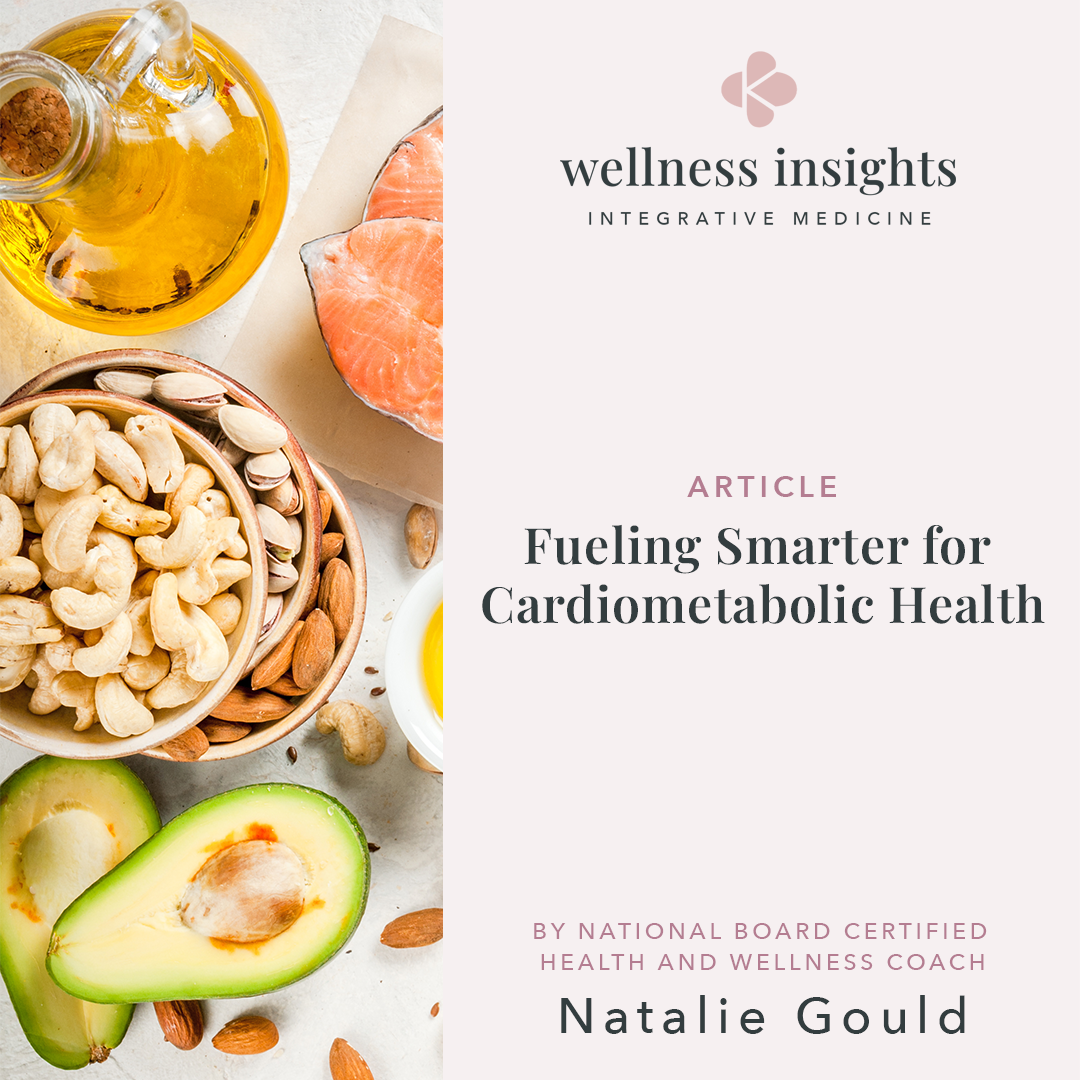
Unsaturated fats from foods like olive oil, nuts, seeds, avocado, and fatty fish help improve lipid profiles and reduce cardiovascular risk. Rather than avoiding fat altogether, cardiometabolic health improves when saturated fats are balanced with, and often replaced by, fats that support vascular function and inflammation control.
Examples include:
Fruit oils (olive oil, avocado oil, flaxseed oil)
Nuts and seeds (walnuts, almonds, pistachios, pecans, pumpkin seeds, flaxseeds, chia seeds)
Fatty fish (salmon, mackerel, sardines, black cod, anchovies)
4. Overall Calorie Balance
Even high-quality foods can work against cardiometabolic health when intake consistently exceeds the body’s needs. Maintaining an appropriate calorie balance supports healthy body fat levels, particularly visceral fat, which plays a major role in insulin resistance, blood pressure, and inflammation. A person’s optimal calorie intake is based on their individual resting metabolic rate, their overall activity level and whether they are looking to lose, maintain or gain weight.
5. A Simple Plate Formula
½ plate vegetables + ¼ plate lean protein + ¼ plate fiber-rich carbohydrates + a thumb-sized portion of healthy fats for flavor
This structure helps naturally regulate blood sugar, appetite, and energy intake, all key drivers of cardiometabolic health.
At Wellness Insights, this way of fueling is only one part of a larger, integrated strategy. That is why we created the Pathways program. Pathways is a structured, physician-guided model of care that brings together nutrition, movement, sleep, stress resilience, and advanced testing to give you a clear understanding of your cardiometabolic health. Through detailed lab work, body composition analysis, and personalized coaching, Pathways helps you see where your system needs support and provides a step-by-step plan to improve your energy, metabolism, and long-term health. You can learn more about how Pathways works and who it is designed for on our Pathways page.
Fueling smarter for cardiometabolic health isn’t about perfection. It’s about consistently choosing foods that help the body regulate energy, protect the heart, and reduce metabolic strain over time. At Wellness Insights, with our new Cardiometabolic Pathway, we help our patients optimize not only their nutrition, but their exercise, sleep and stress management, while using advanced testing and integrative medical care to improve their cardiometabolic health and create a healthy and sustainable lifestyle.
This blog and website do not provide medical advice. It is intended for general informational purposes only and does not address individual circumstances. It is not a substitute for professional medical advice, diagnosis or treatment and should not be relied on to make decisions about your health. Always check with your own healthcare provider before taking a new supplement and before making any significant diet, lifestyle, exercise or other changes. Never ignore professional medical advice in seeking treatment because of something you have read on this site. If you think you may have a medical emergency, immediately call your doctor or dial 911.
